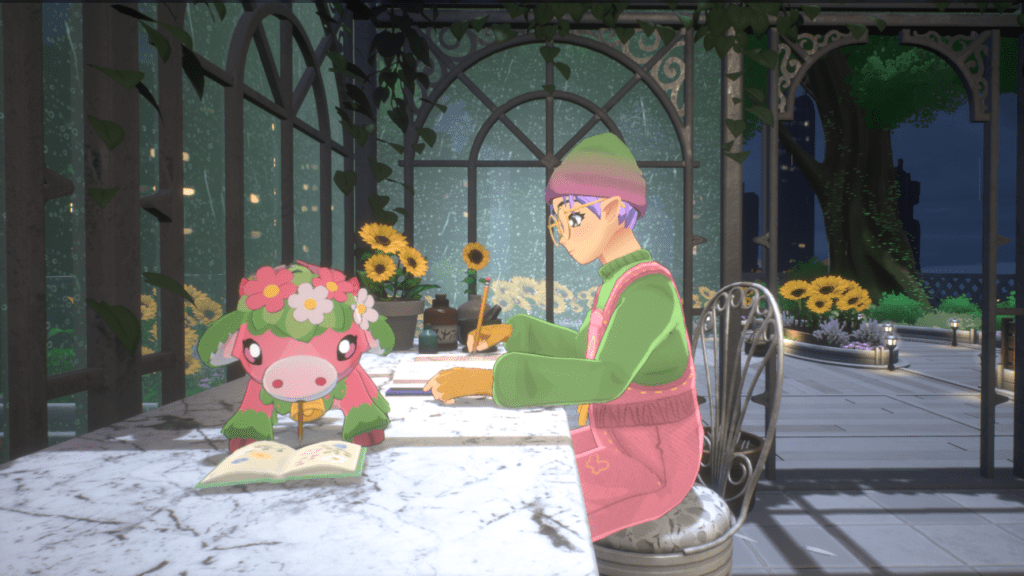
Some writers sit down to start a novel and go from there. I’m one of those writers where I have a scene playing in my head and then I build a novel around it.
*For the purpose of this post, I’m referring to “designing” levels of planning a novel. Pre-planning a novel … planning for a novel?
The first time I ever sat down with the thought of “I need to write a novel, what am I going to write?” was in university. It was the first time that I sat down with the purpose of “writing a novel” rather than “telling a story” and though I rarely create my projects that way, it has been helpful for thinking about how the story will become a novel.
I never try to force the writing, to force the story, but being more aware of how it will eventually be translated into a work for readers is important to the work. It helps me retain a “cleaned up” version in mind whilst also allowing me to spill the paints all over the canvas, knowing that this time I’ve got a guide to finishing off the painting.
The planning almost always comes after majority of the story has been told in my head. Of course that story might change and expand and grow into something bigger afterwards but I typically have a good idea of where I want it to begin, venture to and then end at. Which are pretty good blocks to start with and then I start working on refining the plot and structure, looking at the depth of the story and the themes it carries and how to enhance them.
That’s the biggest thing I don’t consider when I just start writing a story. When I was in uni, I found it difficult to “plan out” my themes. The reason for this is because I took it too literally and so had a narrow idea of what that meant. When I weave themes into my writing, that’s how they go in; woven naturally with the rest of the fabric of the story. I always thought that I needed to artificially inject themes into the story to meet the criteria of “having a theme” and that’s not what they meant at all. I don’t know what themes my story has until I’m writing it or have written it, almost never having them in mind when I start the novel in the barest sense and that’s why I thought I had no idea how to insert them. For example, with Rini & Butler, I wanted to write a story that comments on how society values human life and what would happen if we built something that valued human life completely objectively and it took that value seriously and literally. There are already themes in that idea, I just didn’t know it. For me, I thought it had to be something obvious and almost obnoxious because of how we learnt them in high school. Belonging. Friendship. Racism. Identity. Rini & Butler wasn’t written with “belonging” in mind, but it definitely has that theme.
I think what I got misdirected by was the focus on a sole theme with such emphasis that I thought that’s how themes worked and if my work didn’t have a single-word, blatantly obvious theme, then it wasn’t a proper novel. Again, something I took so literally that I confused myself. So many great novels have obvious central themes but plenty other braided in, because that’s how life works. There are a lot of aspects of my life that I do naturally and as soon as someone tries to teach me how to do it, it becomes quickly complicated and confusing. This is likely a learning issue and inability to understand how/why I do something in comparison to how it’s taught.
The problem for me is that learning more about how we do something is important for learning how to do that thing better. When they introduced essays into our learning (about Year 7), I had a difficult time following the teacher when they would explain how an essay is to be written. I would spend so many hours overthinking the structure and worrying about doing it wrong again that it became stressful and I hated English for it. They were always giving me instructions and it would feel like a foreign language. And then I started writing essays with little regard to those instructions because I hated them and it turns out that was the best thing I could do. The less I thought about something, the better I did with it. Eventually I created an essay guide built for me with instructions that made clear what I was doing. I had figured out how to translate the criteria they gave me, find what I was doing well, and then turn it into a recipe that I could do without looking. It ended up helping a bunch of other students as well. My English teacher took a copy of my planner and photocopied it for herself for other students.
I blame overthinking ( ꩜ ᯅ ꩜;)
In terms of planning, after looking at how publishers and readers will look at the book, it’s just normal plotting and writing. Really the only “planning” for a “novel” I do is making sure that the work presents itself in a manner that convinces everyone it’s a “novel”.
For me, “planning” is what you do for an event, like a travel trip or a baby. Writing, most of the time, just happens. Often the happiest of accidents. The less I think about the plan, the more I enjoy creating. Which applies in so many aspects of my life.
If you’re like me in that regard, my advice is that you document your “no plan”, because it will help you develop a “planner” that won’t feel like a plan. And when you have a plan that doesn’t really feel like a plan, you get creative freedom and there’s less to clean up and fix afterwards.

TLDR:
Don’t try and force yourself to work with someone else’s plan; develop an understanding of yourself and use those plans to inspire your own. Too long have I spent trying to force myself into boxes that others have wanted me to be in and every time I realise I just don’t fit. Be like a cat: if I fits, I sits. And if I don’t fit: I chew and claw holes into it until I do.

 Hopfield is Writing
Leave a comment